Project Summary
| Permit Number | Project Name | Name of Developer | Terms and Conditions |
| REDD+ – 2025-003 | Asayafe Conservation REDD+ project | Pacific Energy Alliance Limited | Refer to Climate Change (Management) (Carbon Markets) Regulation 2025, Section 25 (2) (a-e) |
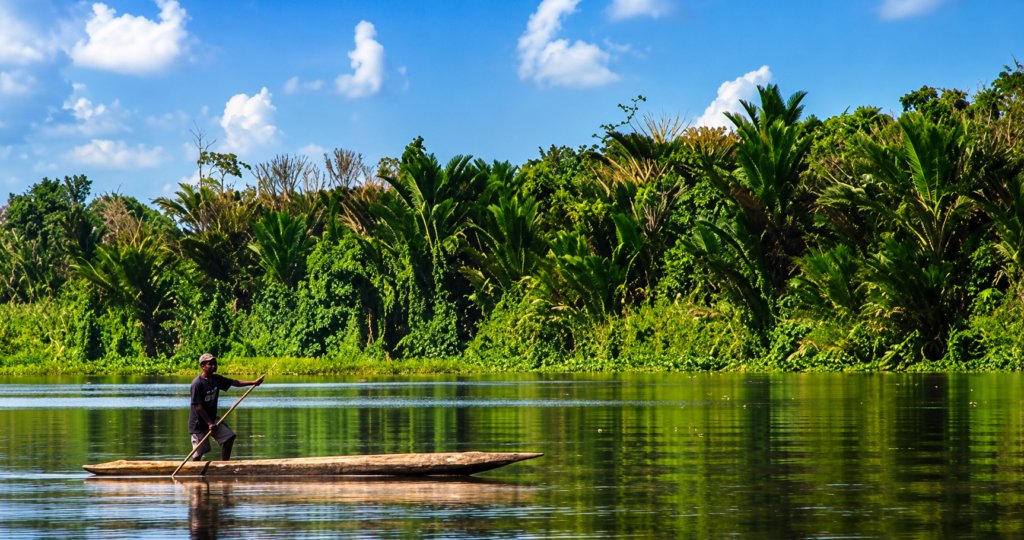
The project area is situated within the tropical rainforest ecosystem of the East Sepik Province, characterized by a warm, humid climate and nutrient-rich soils. The project area spans approximately 200,000 hectares, encompassing a diverse range of vegetation types, including primary tropical forests, secondary forests, and various types of wetlands. The project area is situated between latitudes 3°40’N and 3°50’N, and longitudes 142°50’E and 143°00’E, as shown in the map provided.

The project, categorized under Agriculture, Forestry, and Other Land Use (AFOLU) initiatives, targets 50-year duration, impacting approximately 3,000 populations. Efforts include assisting locals in National Identification registration and clan surveys to gauge demographic shifts.
FOREST CARBON STOCK
The Aseyafe REDD+ project area holds significant potential for carbon sequestration due to its extensive coverage of intact tropical forests, swamp ecosystems, and regenerating secondary growth. Preliminary assessments indicate that the region contains high above ground biomass densities, particularly in lowland dipterocarp forests and sago-dominated swamp forests. These ecosystems are known for their capacity to store large volumes of carbon both in vegetation and in soil, making them critical assets in climate mitigation strategies.
SOCIAL SAFEGUARDS
The Provincial Executive Council recognized and endorsed the project on the 14th of November 2025 with the understanding that the project was in compliance of all national requirements outlined under the climate change laws and regulations. The project did satisfy the social safeguards described under the Climate Change (Management) (Carbon Markets) Regulations 2025 and the Climate Change (Management) Act 2015 as amended.
Free, Prior and Informed Consent (FPIC) was carried out in respective communities prior to consent forms being signed by members of the communities. It was required for more than two sets of meetings to ensure communities understood the technical nature of the project and the implications or benefits of the project.
Benefit Sharing Distribution System: The local communities are legally entitled to 60% or more of the benefits generated, that is, from every sale of the carbon credits through out the project life span. Note the benefit sharing arrangement below specific to the Aseyafe project. The Finance Management Committee is composed of the developer, the landowner company and the sub-national government. Monetary Benefits distributed in percentage as per following chart:

Non-monetary Benefits includes:
- Capacity building: Workshops or training programs to equip local communities with the knowledge and skills necessary to manage the carbon project effectively.
- Skills Training workshops: Providing training programs in sustainable agriculture, ecotourism etc, to equip the locals with new income generating skills
- Biodiversity conservation: Training and workshops on habitat restoration and endangered species protection.
- Renewable energy access: Providing communities with solar panels and cook stoves to reduce reliance on fossil fuels and promote clean energy.
Grievance Redress Mechanism: Climate change legislation promotes the use of existing legal system to address all grievances in any carbon projects, however, depending on the nature of grievances each project can design a specific mechanism suitable to the social and cultural setting of the project. Before using the existing legal system, Aseyafe considered recognising different categories of grievances those within the project management system, religious or cultural related grievances, social related grievances. All grievances that are related to land issues are referred to the existing land mediation while other cases on appeal are referred to village court and progressed further on appeal or on extend of damage caused.
The project plans to keep record of all grievances and maintains an up-to-date registry. This helps keeps record and track grievances, offenders and identify the best resolution approach which can be used in the future similar grievances.
PERMIT CONDITIONS
i) The permit holder to maintain accurate records of emission reduction results, and
ii) Permit holder to submit biennial reports to the Authority on the mitigation activity and the results as required under Section 48, and
iii) The permit holder to maintain accurate records of carbon credits generated as a result of the mitigation activity, and
iv) The permit holder to notify the Authority of the carbon credits sold and transfarred, and the platform via which the transactions have taken place, and
v) The permit is valid for 20 years, however, must be renewed every five (5) years. A Letter of Authorisation is being issued and contains details of operations and transactions.
For more information contact carbonprojects@ccda.gov.pg
Objectives
The project's core objective is halting deforestation, preserving rainforests, and mitigating global carbon emissions, thus enhancing the welfare of the local communities and the broader East Sepik Province community. Evolving from traditional commercial logging, the project now emphasizes carbon offset strategies, sustainable logging practices, and diversified livelihood opportunities, including commercial crops and cattle rearing. By adhering to Forest Stewardship Council certification standards, Pacific Energy Alliance aims to implement sustainable logging practices, alongside selling carbon credits globally to fund community development initiatives. Beyond economic impacts, the project seeks to leave a lasting legacy, recognizing both humanitarian and environmental imperatives, aiming to leave the world in a better state for future generations.
The REDD+ initiative aims to support community-led land use planning that balances conservation with livelihood needs. By promoting agroforestry, sustainable harvesting, and alternative income-generating activities, the project seeks to reduce deforestation drivers while enhancing local resilience.
Project Gallery